Crypto giveaway scam: the deepfake video isn't real
A deepfake crypto scam is an AI clone of a public figure announcing a crypto giveaway, with a link that drains your wallet or asks you to send crypto to be doubled. Don't test the video. Test the offer.

Updated
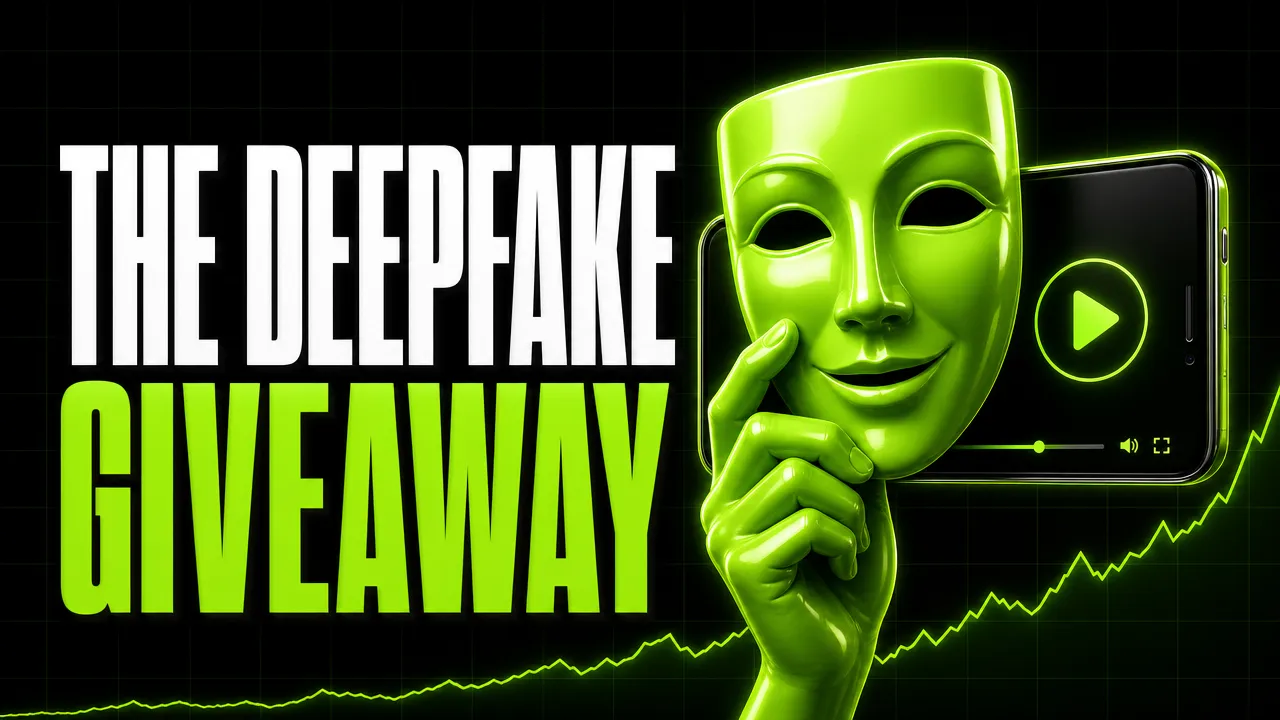
No billionaire is filming a TikTok ad to give you free crypto. Start there, and the deepfake crypto scam falls apart before you even finish watching it.
A deepfake crypto scam is a video ad or livestream where an AI-generated clone of a public figure announces a crypto giveaway, a trading bot or a reward, and sends you to a page that either asks to connect your wallet or asks you to send crypto so it can be "doubled" and returned. The face is real and the voice is real. But the person never said a word of it, and nothing ever comes back.
Now, I've watched this scam go from a bad lip-sync in 2023 to something that fools people who know better. I've also heard voice clones of myself and my co-founder. So this isn't theoretical for me.
So who's this for? It's for anybody who's seen a familiar face announce free crypto and felt that little pull of "what if." And if you've already connected a wallet to one of those pages... stop reading for a second, move whatever's left to a fresh wallet, and then come back.
What's in the video: how AI clones a public figure from the endless hours of their voice and face online, the giveaway ad script, why these scams come in waves tied to the news, a 2023 TikTok example where you can watch the lips fail, and why the test is the offer and not the video.
How does a deepfake crypto scam work?
It borrows a face you already trust and puts an offer in its mouth.
Public figures with a footprint in crypto have thousands of hours of themselves recorded and posted: interviews, keynotes, podcasts, earnings calls. And that's training data. The tools now take that footage and produce a video of the person saying anything the scammer types. The most common versions I've seen use Elon Musk, Michael Saylor and, when the news cycle hands them one, the CEO of a major crypto company. None of these people are involved. Their likeness gets stolen the same way your money is about to.
The script is always some version of "we've had a great year, we want to give back to our supporters, click the link below." And the link does one of two things. If you have a wallet, the page asks you to connect it, and a signed approval drains it. If you don't, it gives you an address and tells you to send crypto so it can be multiplied and sent back. Nothing is ever sent back. There's no giveaway. There's a wallet address and a video.
Why do deepfake crypto scams come in waves?
Because they follow attention.
When a public figure is in the news, the deepfake of that figure follows within days. When a long-running court case involving a crypto company resolved, an ad with that company's CEO "rewarding" supporters ran hard for about a month. And if a carmaker announced tomorrow that it was discounting cars for crypto, you'd see that executive's face in a hundred giveaway ads by the weekend. The story puts a name in everybody's feed, and the fraud rides the wave.
Now here's the part for anybody who thinks they'd catch it. The quality in 2023 was poor enough that you could watch the lips and know. The quality in 2026 is good enough that you often can't. Deepfake technology improves every month, and your ability to spot a fake face doesn't. Which is exactly why the test has to change.
How do you tell a deepfake crypto giveaway from the real thing?
Don't test the video. Test the offer.
No multi-billionaire running massive companies is taking time out of his day to film a social media ad giving away free crypto. People who own billions in bitcoin aren't blessing strangers with one coin for sending them a dollar's worth. That's not how the world works, and it never has been. So the moment a famous face offers you free money for sending money, you have everything you need to know, and you never had to squint at the lip-sync.
And here are three more tells, in case you want them. The account posting the ad is new, has almost no history, or is a slight misspelling of the real one. The page it links to was registered recently and has no other content. And the offer has a clock on it: "only for the next 24 hours." Real companies don't run giveaways through unverified accounts with a countdown.
What about deepfaked voices and smaller names?
This is the part that's personal, and it's the part most pages skip.
Deepfakes don't stop at billionaires. Anyone with an audience and a few hours of recorded video is cloneable, and that includes crypto educators like us. I've heard voice clones of myself and my co-founder. No video deepfake of us has surfaced yet, but I'd be naive to think it won't. Impersonators already run fake profiles with our names and faces every single day, pitching "inner circle" groups where you send crypto to a platform they chose. So the deepfake is just the next version of that profile.
Which is why the rule we give everyone applies to us first. We never message people first, we never manage anyone's crypto, we never run giveaways, and we never ask you to deposit on a platform we picked. So if a video of me says otherwise, the video is lying. Check any message or video against our verification page before you believe it.
What should you do if you clicked one?
It depends on what you did on the page.
If you only watched the video, nothing happened. If you connected a wallet and approved anything, assume that wallet is compromised, so move whatever's left to a brand-new wallet with a brand-new seed phrase and stop using the old one. And if you sent crypto to an address, it's gone, and the next message you get will be from someone offering to recover it for a fee. So read legitimate crypto recovery companies before you reply to that, and file the free reports in how to report a crypto scam.
Then report the ad on the platform where you saw it. It won't come down fast enough, but do it anyway.
What this page doesn't cover
Deepfakes used in romance scams, where the "girlfriend" sends a short, odd video call, are covered under crypto romance scam. Deepfaked "news anchors" promoting trading bots are the same scam in a different costume. And here's where I could be wrong. A legitimate company can run a real promotion. But it'll be announced on the company's own verified channels, it will never ask you to send crypto first, and it'll survive ten minutes of searching.
Where this fits
The deepfake ad is one of four doors into the same room, alongside the WhatsApp group, the romance scam and the imposter profile. All four end with your crypto in a wallet you don't control. The four questions that catch every one of them, including "what is this person's real name?", are on how to spot a crypto scam.
And if you've already been caught by one, the way back starts with a one-day audit of what happened and why, and we walk new members through it in week one: after a crypto scam, the way back.
So here's your job this week. The next time a familiar face offers you free crypto, don't look at the lips. Look at the ask. Then show the ad to one person over 60 in your life, because they're seeing these too and nobody's explaining it to them.
This is education, not legal or financial advice.
Frequently asked questions
A video ad or livestream where an AI-generated clone of a public figure announces a crypto giveaway, trading bot or reward, and sends viewers to a page that either asks to connect a wallet, which then drains it, or asks you to send crypto to be multiplied and returned. The person never said any of it and nothing comes back.
Test the offer, not the video. No billionaire or crypto executive runs a giveaway through a social media ad that asks you to send crypto first or connect your wallet. Other tells: the posting account is new or a misspelling of the real one, the linked page was registered recently, and the offer has a countdown.
No. Those names are the most common faces used in deepfake giveaway ads because both have a public footprint in crypto and thousands of hours of recorded video. Neither is involved. Their likeness is stolen, and any crypto you send is gone.
They follow attention. When a public figure or crypto company is in the news, deepfake ads using that figure appear within days and run for weeks. A court ruling, a product announcement or a price move puts a name in every feed, and the scam rides the wave.
Assume the wallet is compromised. Move whatever remains to a brand-new wallet with a brand-new seed phrase and stop using the old one. If you sent crypto to an address, it cannot be recovered, and anyone who offers to recover it for a fee is the second scam. Report the ad on the platform and file at ic3.gov.
Yes. Anyone with an audience and a few hours of recorded video can be cloned. Voice clones of both Crypto Renegades founders have already been heard. The rule applies to us first: we never message people first, never manage anyone's crypto, never run giveaways and never ask you to deposit on a platform we chose.
Sources
General education only, not financial advice. Crypto and leverage involve substantial risk of loss. Read our risk disclosure.

Written by
Chad WittfeldtCo-Founder and Strategy Lead, Crypto Renegades
Chad first heard about Bitcoin in 2012, bought his first coin in 2013 at around $100, learned markets through forex in 2015 and went full time on crypto in 2017, posting public technical analysis on Bitcoin's break above $3,000 that August. That same year he flagged USI Tech and BitConnect as Ponzi schemes and warned the people around him before either one was exposed. He ran an Ethereum GPU mining operation from 2019 to 2021, and verification runs through everything he teaches.