Seed phrase storage: why nothing digital ever touches mine
Seed phrase storage comes down to one rule: nothing digital. Why that rule kept every dollar of my crypto safe, the storage mistakes to fix tonight, paper vs metal and two locations.

Updated
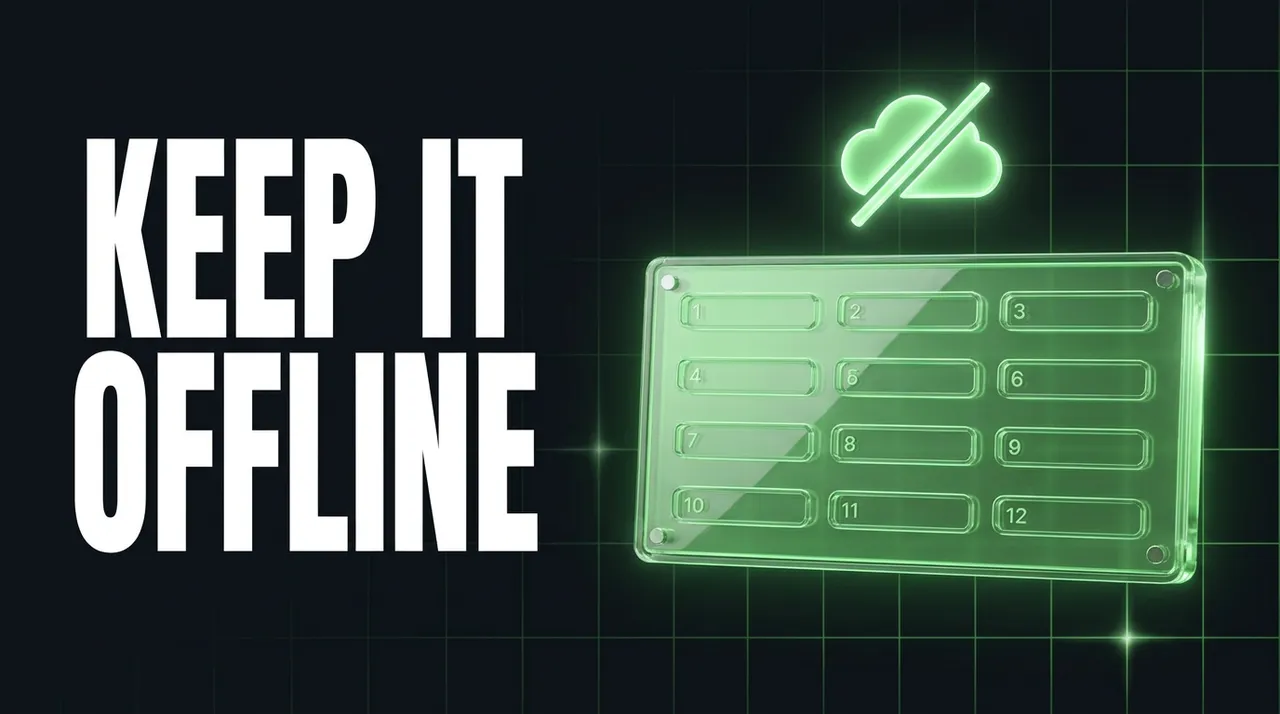
Seed phrase storage has one rule that matters more than all the others, and it's that your seed phrase never lives on anything digital. That means it never goes in an email, on your phone, in a file on your desktop, in a photo or in the cloud. Write it on paper or stamp it in metal, keep it in two separate places, and never type it into a website or an app.
I don't say that because I read it somewhere. I say it because I found out the hard way what an attacker can reach once they're inside your computer, and the only reason I didn't lose a dollar of crypto is that my seed phrases weren't there.
Some of you hold your own keys, or you're about to, and you want to get this right one time and stop worrying about it. Others have the words saved in a notes app "just for now"... and if that's you, I wrote this one with you in mind.
What happened when malware got into my computer?
A while back I got hit with malware, and it got into everything on my computer. My bank accounts, my social media, all of my email. It took me four to five months to fully recover from it, and I wouldn't wish those months on anybody.
But here's the part I want you to hear. They didn't get a single dollar of my crypto. Not ONE. And it wasn't luck, and it wasn't some expensive security software. It was because none of my seed phrases were saved on my desktop, in my email or anywhere digital. The attacker had the keys to my whole digital life, and the one thing that mattered most simply wasn't in the house.
That's the whole lesson of seed phrase storage in one story. Whatever is on your devices, assume someone can eventually see it.
Where do people store a seed phrase that they shouldn't?
Let's talk about the mistakes, because I see the same ones over and over:
- Email. People send the words to themselves "as a backup." If someone gets into your email, they get your words with it.
- Phone notes and screenshots. It feels private because it's in your pocket. It isn't.
- A file on the desktop. Malware on your computer can read any file on it, and a file full of recovery words is exactly what it's hunting for.
- Photos. A picture of your recovery sheet lives in your camera roll, and often in your cloud account too.
- Cloud storage. Your words are now only as safe as one password and one recovery email.
Is the photo risk real? In February 2025, researchers at the security firm Kaspersky reported a piece of malware they named SparkCat, hidden inside apps in the official Android and iPhone app stores. It scanned the photos on infected phones, used text recognition to find wallet recovery phrases and sent the matching images to the attackers. The infected apps had been downloaded more than 242,000 times from the Android store alone.
So if your seed phrase is in your camera roll right now, that's not a backup. That's a copy waiting for someone else to find it.
How do you store a seed phrase: paper or metal?
Either works, as long as it's physical and offline. Here's the real difference.
Paper is free and you can do it right now. Write the words by hand, in order, numbered, in clear block letters, and double check every word against the screen before you put it away. The downside is that paper burns, gets wet and fades.
Metal costs a bit more and takes more effort, because you stamp or slot the letters in by hand. In return it survives the things that destroy paper. For a long-term stack, that's worth it.
My take is simple. Start on paper today if paper is what you have, because a paper backup beats a digital one every single time. Then move the long-term holdings to metal once you can. Want the difference between a seed phrase and a private key, and why losing one is so much worse than the other? That's covered in our seed phrase glossary entry.
Why does seed phrase storage need two locations?
You need two because one copy is one bad day away from zero. A fire, a flood, a move, a break-in or a family member cleaning out a drawer, and it's gone.
So keep two copies in two separate, secure places, like a home safe and a lock box somewhere else. Both copies should be complete, and both should be somewhere you control and can get to.
And think about the people around you. Somebody you trust should know that a backup exists and roughly where, even if they can't read it. A plan that only lives in your head is a plan that dies with you.
What does good seed phrase security look like every day?
Mostly, it looks like doing nothing at all with the words. The keys live on a cold wallet, the words live on paper or metal, and you don't look at them, move them around or type them anywhere.
If I could tattoo one rule on every new holder, it's that your seed phrase never gets typed into a website, an app, a form, a chat or a "wallet checker." No real support team will ever ask for it. The only time those words get entered anywhere is when you're restoring a wallet onto a device you control, and that should almost never happen.
So when a message says your wallet needs "verifying" or "syncing," and the next step asks for 12 or 24 words, you already know what it is. The words are the wallet. Whoever has them owns the coins.
When did you last check where your seed phrase actually lives?
Do a seed phrase audit tonight. Search your email, your notes, your photos, your cloud drive and your desktop for any copy of your words. If you find one, treat that wallet as exposed. Set up a new wallet with a brand new seed phrase, move the coins to it, and delete every digital copy of the old words. Then write the new words on paper, check them twice and put the copies in two locations. The full setup, including the test send before you move everything, is in how to self custody crypto.
That audit is how the "just for now" copy finally goes away, and it's a lot cheaper to do it tonight than after somebody else finds it. If you want to learn custody, security and risk with coaches checking your work, try our Skool Community free for a week, then $97/month.
This is education, not financial advice. Facts are current as of November 3, 2026.
Frequently asked questions
The best seed phrase storage is offline and physical, with the words written on paper or stamped in metal, kept in two separate secure locations, and never saved in email, photos, notes, files or cloud storage. Metal survives fire and water better than paper for long-term holdings.
Write the words by hand, in order, check each one against the device screen, and keep two complete copies in two secure places you control, such as a home safe and a lock box. Never type the words into a website, app or chat.
We don't recommend it. Any digital copy is only as safe as the account and device it lives on, and malicious software that gets into a computer or phone can reach it. A physical copy on paper or metal, kept offline in two places, is the safer choice.
Treat the wallet as exposed. Create a new wallet with a brand new seed phrase, move the coins to it with a test send first, delete every digital copy of the old words, and store the new words on paper or metal in two locations.
Sources
General education only, not financial advice. Crypto and leverage involve substantial risk of loss. Read our risk disclosure.

Written by
Chad WittfeldtCo-Founder and Strategy Lead, Crypto Renegades
Chad first heard about Bitcoin in 2012, bought his first coin in 2013 at around $100, learned markets through forex in 2015 and went full time on crypto in 2017, posting public technical analysis on Bitcoin's break above $3,000 that August. That same year he flagged USI Tech and BitConnect as Ponzi schemes and warned the people around him before either one was exposed. He ran an Ethereum GPU mining operation from 2019 to 2021, and verification runs through everything he teaches.